Introduction
Every day a unit sits empty is money you do not get back. That is the whole reason to care about how to advertise a rental property in the first place. A vacant unit is not neutral. It is a bill. So when I list one of my own rentals, the goal is not just to get the phone ringing. It is to fill the unit fast with someone who pays on time and treats the place well. After years of doing this as a landlord and a licensed Colorado agent, I have learned that a good listing does most of that work for you. Here is how I approach it.
What a Weak Listing Actually Costs You
A slow or sloppy listing costs you in two directions at once, and both hurt.
The first cost is vacancy. If your rent is $1,800 a month, every week the unit sits empty is about $415 gone. A listing that takes an extra three weeks to fill because the photos are dark or the price is off just cost you north of $1,200. That is real money, and no rent increase makes it back.
The second cost is worse, and it is quieter. A vague or desperate listing pulls in the wrong applicants. When you cast a wide net with no filter, you spend your evenings answering messages from people who were never going to qualify, and you get pressure to say yes to the first warm body that shows up. That is how landlords end up with late rent, damage, and an eviction they saw coming. A good listing is a filter, not just an ad. It attracts more of the right people and fewer of the wrong ones.
So the job is two things at once. Fill the unit quickly, and fill it with someone qualified. The framework below is built to do both.
How to Advertise a Rental Property: A Landlord's Framework
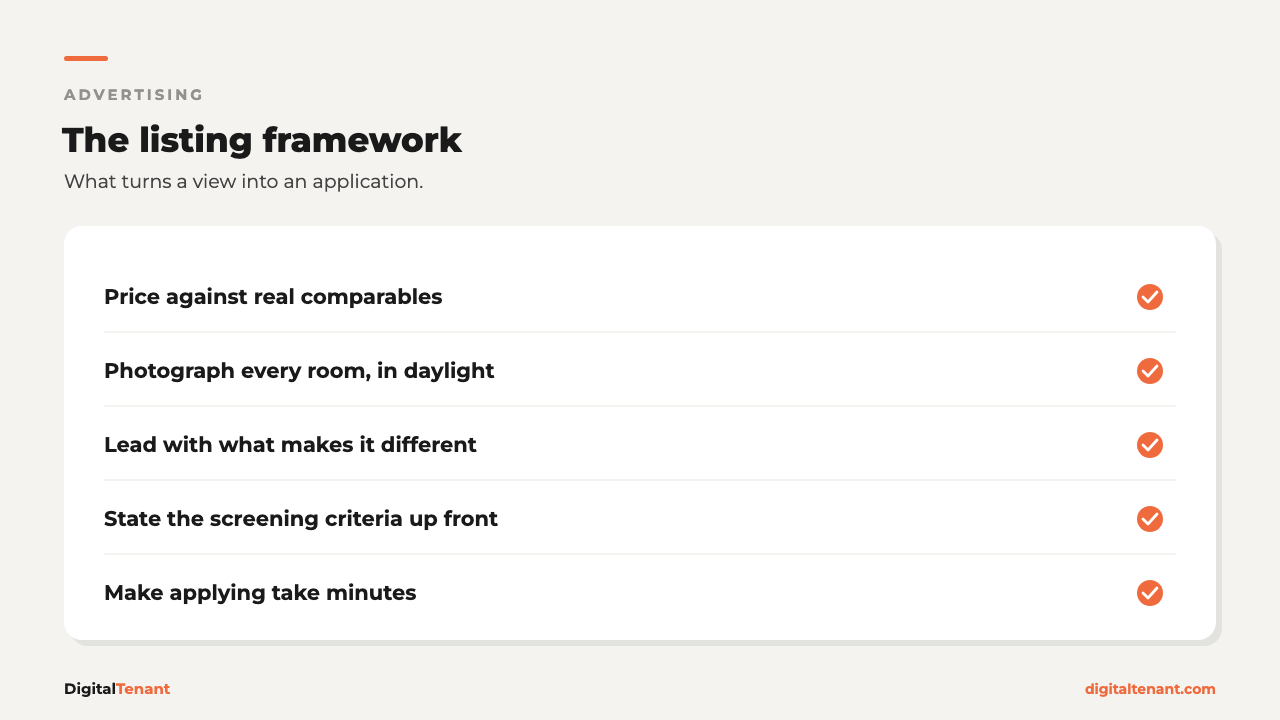
You do not need a marketing budget. You need to do six things well and in order.
1. Price It Right Before You Do Anything Else
Price is the single biggest lever on how fast you fill. Get it wrong and nothing else matters.
Pull three to five comparable units in your immediate area. Same bed and bath count, similar square footage, similar condition. Look at what is actually renting, not what is sitting listed for 60 days. If your number is 10 percent over the market, you will get silence. If it is way under, you leave money on the table and sometimes attract people who wonder what is wrong with it.
Price to the market and slightly on the competitive side if you want to fill fast. A unit priced right rents itself. A unit priced high needs a discount later, and a listing that has been up for weeks with a price drop reads as damaged goods.
2. Take Photos That Do the Selling
Renters scroll fast. Your photos are the whole first impression, and most listings lose here.
Clean the unit first. Open every blind and turn on every light. Shoot in daylight, hold the phone horizontal, and take wide shots from the corners of each room so the space looks its actual size. Get the kitchen, the bathroom, the living area, each bedroom, and one or two exterior or amenity shots. Ten good photos beat three dark ones.
Skip the clutter, skip the flattering-angle tricks that lead to disappointed showings, and lead with your strongest room. If the kitchen is the best feature, that is your first photo.
3. Write a Clear, Compelling Listing
Your copy should answer the questions a renter has before they have to ask. Vague listings create back-and-forth. Clear listings create applications.
Cover the essentials up front: rent, deposit, bedrooms and bathrooms, square footage, parking, pet policy, what utilities are included, and the available date. Then give it a little life. Name the features that matter to a renter: in-unit laundry, a fenced yard, off-street parking, a short walk to transit. Write in plain language, not a wall of abbreviations.
One serious rule here. Keep your listing fair-housing compliant. Advertise the property, never the type of person you want in it. Do not write "perfect for a young professional," "ideal for a single tenant," "great for a Christian family," or anything that describes who should live there. Describe the unit and its features. Let the application and your screening criteria do the qualifying, applied the same way to everyone. This protects you legally and it is simply the right way to do the job.
4. Post Where Renters Are Actually Looking
A great listing nobody sees does not fill anything. Put it where renters look.
The big rental marketplaces and search sites are where most renters start, so your listing needs to be there. Local Facebook groups and neighborhood networks work for many markets. A clear yard sign still catches drive-by interest in the immediate area. The point is to be where your renters already spend time, and to keep the listing identical across every place you post so the details never contradict each other.
5. Respond Fast, Because Speed Wins
The best applicants are talking to several landlords at once. The one who answers first and makes it easy to move forward usually wins them.
Aim to respond within a few hours during the day. Have a short, friendly reply ready that answers common questions and points them to the next step. You do not have to be glued to your phone. You have to be reliably quick. A qualified renter who waits two days for a reply has already applied somewhere else.
6. Route Interest Straight Into an Application and Screening
This is where most landlords leak their best leads, and it is the step that ties the whole thing together.
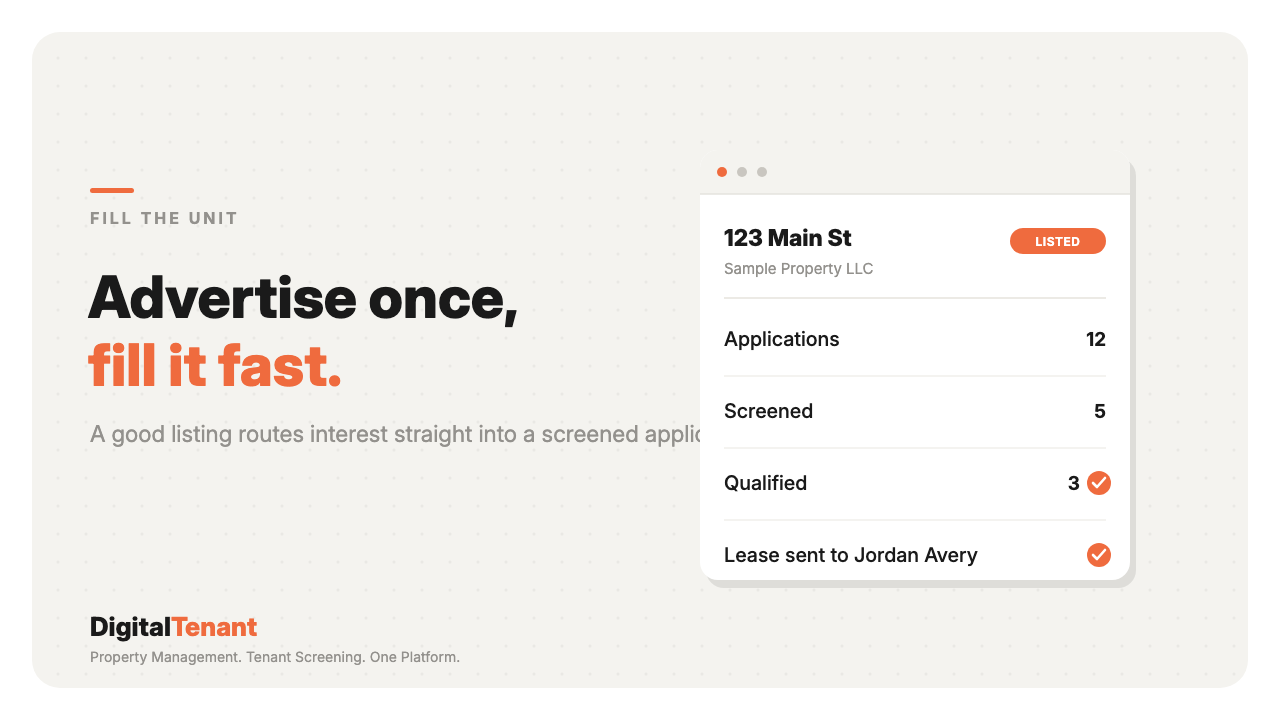
You have done the work. The unit is priced right, the photos are sharp, the listing is clear, and now an interested renter is standing in front of you. If your next move is "text me and we will figure out an application," you just added friction at the exact moment they were ready. Interest is perishable. The goal is to turn an interested renter into a complete application with screening attached, in one smooth step, before that interest cools.
How DigitalTenant Turns Interest Into Qualified Applications
This is the part I built DigitalTenant for, because it is the part I kept fumbling with my own rentals.
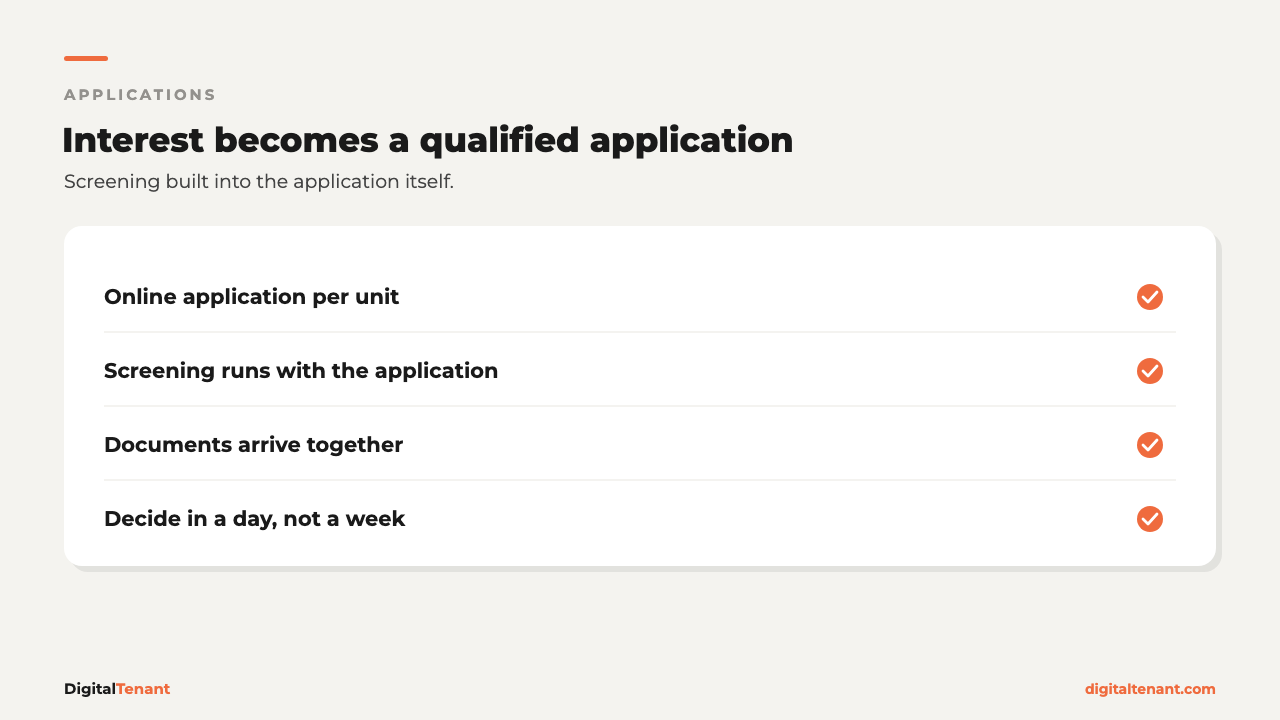
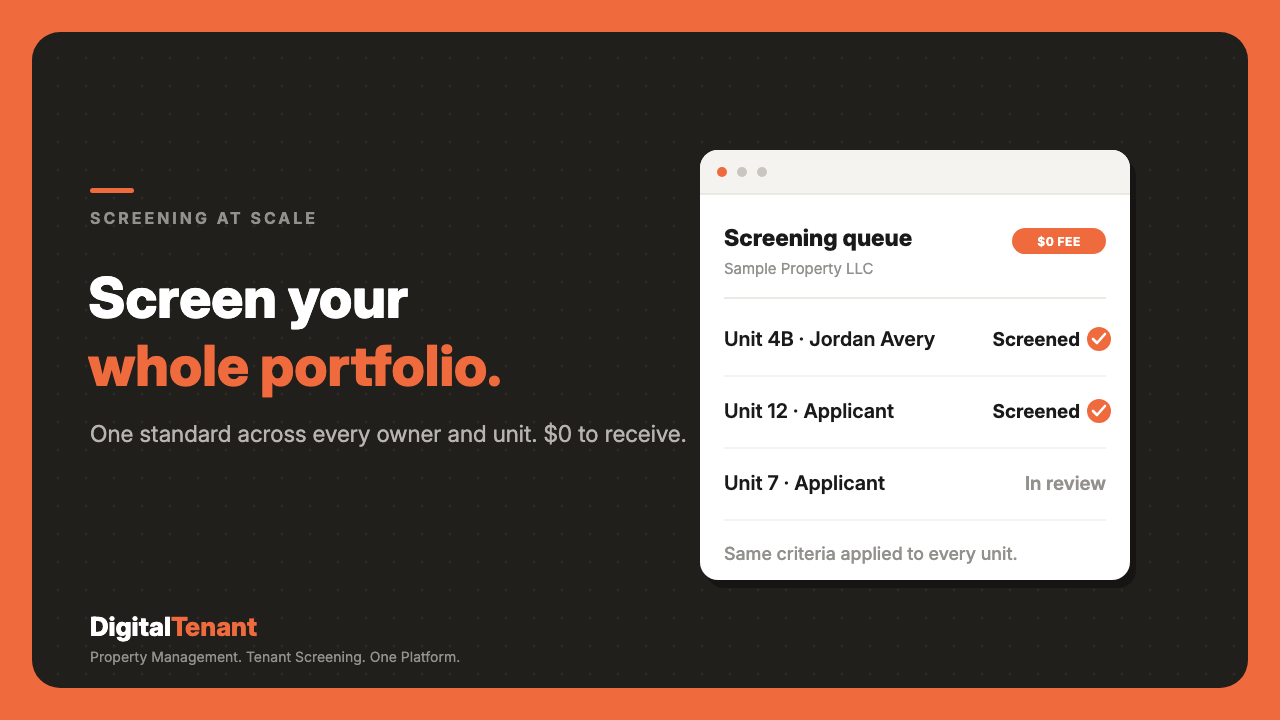
When someone is interested, you send them straight to an online application. They fill it out, and screening is built right in. That means TransUnion credit, background, and eviction reports, plus pay stubs checked for tampering through Plaid, all attached to the application instead of scattered across emails and separate services. You are not chasing pay stubs or logging into three tools. You get a complete picture of the applicant in one place, applied the same way to every person who applies.
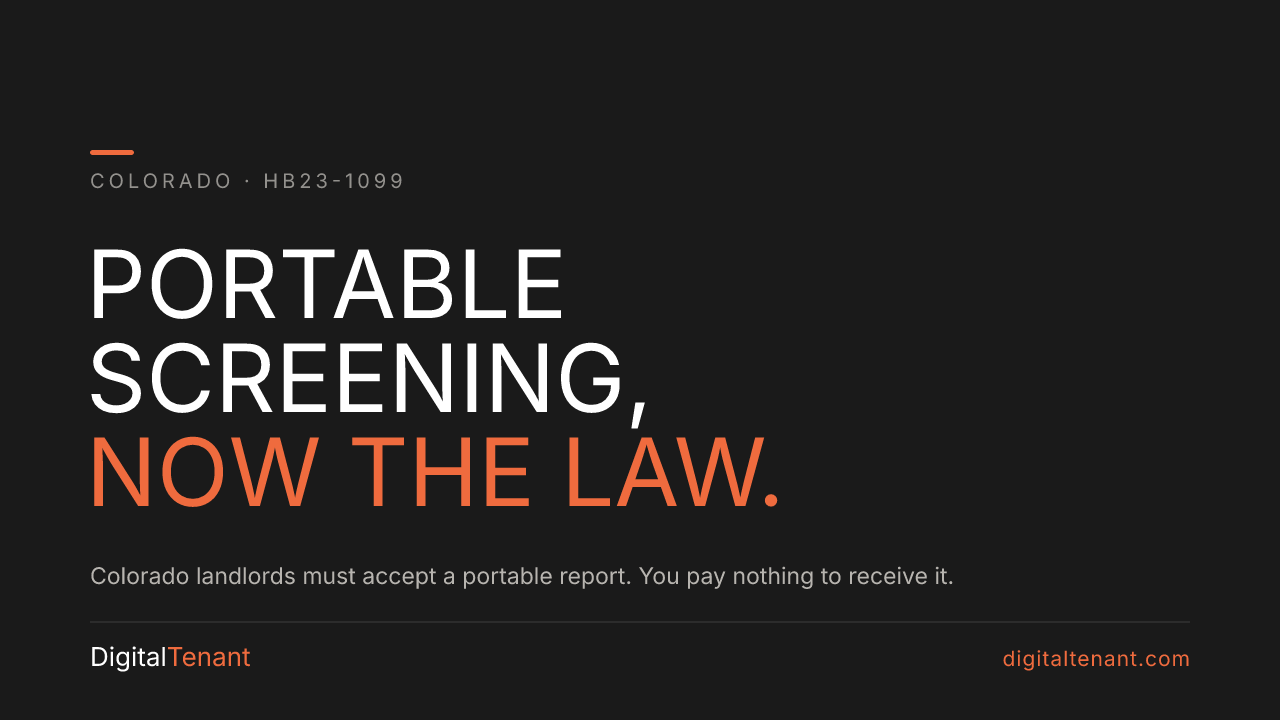
There is also the Tenant Passport. If an applicant already has one, you can receive and view it for free. The tenant pays for their own screening, and you get TransUnion credit, background, and eviction results, with pay stubs checked for tampering through Plaid, without paying a screening fee to look at them. You can see how that works on our landlord screening page, and the tenant side lives on our tenant screening page.
The result is the whole point of a good listing. You fill the unit faster because there is no gap between interest and application, and you fill it with someone qualified because screening happens automatically instead of being an afterthought. And you can start on Property Lite, which is free for up to three units, so a smaller landlord can run this whole flow without paying anything to begin. The full breakdown is on our pricing guide.
Key Takeaways
- How to advertise a rental property comes down to two goals at once: fill it fast, and fill it with someone qualified. A good listing does both.
- A weak listing costs you twice. Vacancy on one side, bad applicants on the other.
- Work the framework in order: price it right, shoot good photos, write clear copy, post where renters look, respond fast, and route interest into an application.
- Keep every ad fair-housing compliant. Advertise the property, never the type of tenant.
- The fastest way to fill with qualified renters is to turn interest into a complete application with screening built in, which is exactly what DigitalTenant does.
Next Steps
- Pull three to five comparable units and price your unit to the market.
- Reshoot your listing photos in daylight with every light on.
- Rewrite your listing to cover the essentials and stay fair-housing compliant.
- Set up an online application with screening attached so interested renters can apply on the spot.
- Review the pricing guide and start on free Property Lite for up to three units.
- Try DigitalTenant Free and list your next vacancy with screening built in.
About the Author
Pierre Elize, Founder of DigitalTenant. Property Management. Tenant Screening. One Platform.
Your state's official lease rules and our free lease template, sent to your inbox.
Guides for landlords on screening, leases, rent and maintenance.