Introduction
An applicant tells you they already have a screening report and asks you to use theirs. Your first instinct is probably suspicion, and I do not blame you, because mine was too. The question every landlord asks me at this point is some version of can landlords trust portable screening reports when the tenant is the one who paid for them. It feels backwards. The person being evaluated bought the evaluation.
I have been a landlord across a few states, and I am a licensed Colorado real estate agent. I asked that exact question before I understood how these reports are actually put together. The answer changed how I screen, and it is not the answer most people expect.
This is educational and not legal advice. Screening laws vary by state, so confirm your own rules and the current statute.
Why the Question Feels Reasonable
The instinct comes from a fair place. You have been burned, or you know someone who has.
Think about what a normal application looks like. The applicant emails you a couple of pay stubs, maybe a bank statement, maybe a letter from an employer. You open the PDFs, you look at them, and you decide whether you believe them.
That is the part nobody says out loud. In that setup, you are the fraud check. And you have no real way to run it. You are squinting at a document, comparing fonts, wondering whether the numbers line up, and ultimately just hoping. You are not a forensic document examiner. Neither am I.
So when someone hands you a report they paid for, it feels like one more thing to be skeptical about. The mistake is comparing it to a perfect process instead of comparing it to what you are actually doing now.
What Is Actually Inside a Portable Screening Report
Here is where the answer to can landlords trust portable screening reports turns on a detail most landlords have never been told. The tenant pays for the report. The tenant does not produce the report.
Those are completely different things, and the difference is everything.
With a Tenant Passport, the underlying data comes from the same sources you would use yourself:
- TransUnion-verified: credit report, background check, and eviction history. That is the same bureau you would pull from if you ordered the screening. The applicant does not touch it.
- Plaid-verified: identity and income, confirmed by connecting to the actual bank account. Not a screenshot of a bank balance. A live connection to the institution.
- Document-verified: supporting pay stubs and income documents run through Plaid's OCR detection, which reads the document and flags alteration.
That third one deserves its own paragraph, because it is the piece that answers the suspicion directly.
If an uploaded pay stub has been edited, it fails verification. The application does not arrive on your desk carrying a warning label for you to evaluate. It does not arrive at all. The screening happened before you were ever involved.
💡 Pro Tip: Compare that honestly to your current process. A PDF pay stub emailed straight to your inbox has passed through no verification of any kind. The portable report has passed through three. The reusable report is usually the stronger record, not the weaker one.
 Accepting Is Not Approving
This is the second objection, and in my experience it is the bigger one. It is also the one built entirely on a misunderstanding.
A lot of landlords hear "you have to accept portable screening reports" and quietly translate it into "you have to rent to whoever shows up with one." Those are not remotely the same thing.
Accepting means you look at it. That is all.
You still apply your own criteria. Your own income-to-rent threshold. Your own standards on credit, background, and eviction history. You still say no if the file does not meet the bar you set before the unit was ever listed.
In Colorado, HB23-1099 requires you to accept a reusable screening report that meets the requirements, and it stops you from charging that applicant a second screening fee for a screening they already paid for. It has never required you to approve anyone. The law governs how the information reaches you. It does not govern your decision.
There is one exemption. If you only take one application fee at a time for a unit, and you refund it in full within 20 days when either side declines, you don't have to accept portable reports. In practice that means screening applicants one by one while the unit sits empty, which is why most landlords accept them.
⚠️ Common Mistake: Refusing a portable report because you think accepting it commits you to the applicant. In Colorado that refusal can put you on the wrong side of HB23-1099, and you gave up better information for nothing. You were always free to decline the applicant on your written criteria.
If you want the step by step on receiving and checking one, I wrote that up separately in how to accept a portable screening report in Colorado.
 Four Things to Check on Any Portable Report
Trusting the system does not mean skipping your own diligence. Here is what I look at, in order.
1. Where it came from
Confirm the report came from a recognized screening provider and that the data is bureau-sourced. A PDF someone assembled themselves is not a portable screening report, whatever it is titled.
2. How old it is
Reports go stale. A Tenant Passport is valid for 30 days, which keeps you from reading something pulled last spring. Check the date against your state's recency requirement.
3. Whether it covers what you need
Credit, background, and eviction history are the floor. A Passport also carries identity and income verification, employment verification, rental history, and supporting documentation, which is more than standard portable screening usually includes.
4. Whether the person matches the report
Identity verification handles most of this, but confirm the name and details on the report belong to the person standing in front of you.
What This Does to Your Vacancy
Now the practical reason any of this matters.
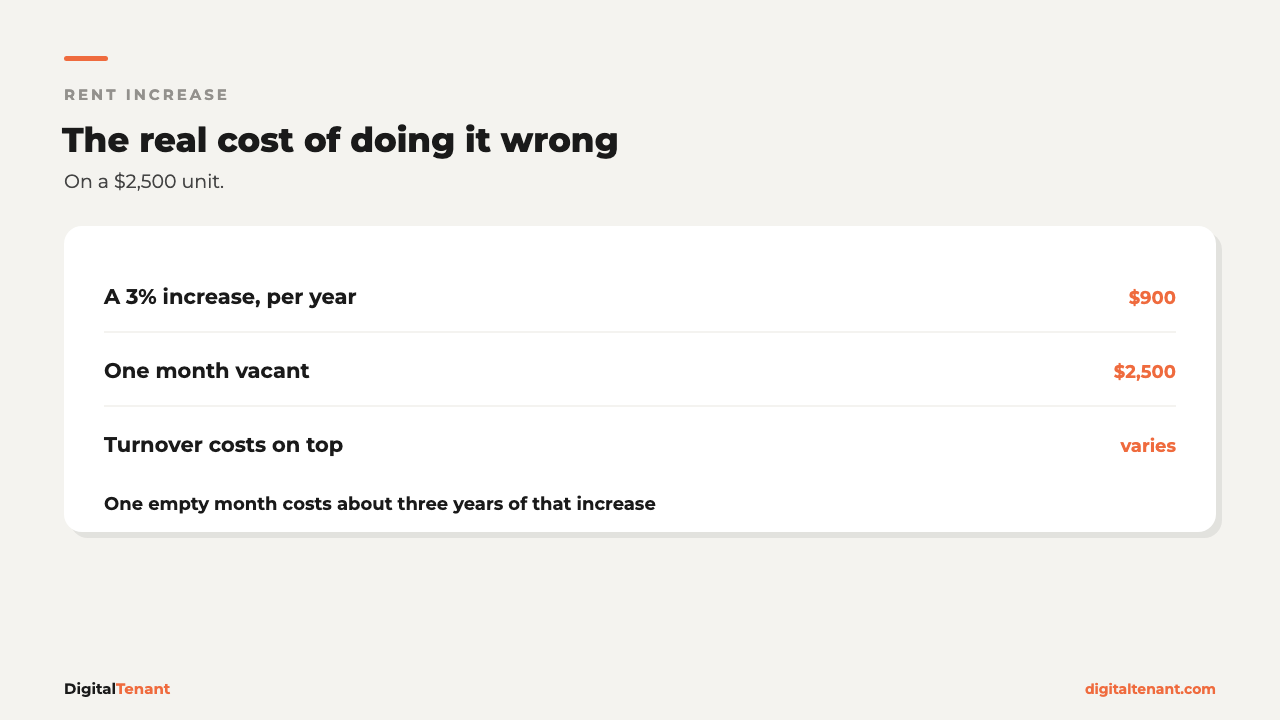
One empty month on a $2,500 unit is $2,500 you never get back. That is 8.3% of the year's rent on that unit, and you still paid the mortgage, the utilities, and the hours you spent showing it.
Most vacancy is not a marketing problem. The listing is usually fine and the photos are usually fine. It is a speed problem.
Somebody applies on Saturday. You ask for pay stubs. Two of four arrive on Tuesday. You ask again. By the time you have enough to decide, it is the following week and they have signed somewhere else. Do that twice and you have burned a month without ever seeing a bad applicant.
The number worth tracking is not days on market. It is days from application to decision.
A complete, verified file collapses that number. Everything arrives at once, already checked, and you decide in a day instead of a week. Fill a $2,500 unit a week sooner and you just recovered $625 you were never going to see.
What It Costs You
Nothing.
Landlords and property managers pay no fee to receive or view a Tenant Passport. The applicant pays for their own screening. You get a verified, complete report at no cost, and you keep the entire decision.
That is worth sitting with, because it inverts the usual tradeoff. You are not paying more for better information or accepting worse information to save money. You are getting a more thoroughly verified file, faster, for free.
You can see how the landlord and property manager side works on our landlord screening page, and the tenant side lives on the Tenant Screening page. Property Lite is free for up to three units, so you can run your next vacancy this way without paying to try it. Plans and tiers are on the pricing guide.
Key Takeaways
- Can landlords trust portable screening reports? Yes, when the data is bureau-sourced. The tenant pays for the report. The tenant does not produce it.
- Credit, background, and eviction come from TransUnion. Identity and income are verified through Plaid, connected to the actual bank.
- Uploaded documents run through OCR detection. An altered pay stub fails verification and never reaches you.
- Emailed PDF pay stubs pass through no verification at all, which makes the portable report usually the stronger record.
- Accepting is not approving. You keep your own criteria and you can still say no.
- Colorado HB23-1099 requires most landlords to accept a qualifying reusable report. It does not require you to rent to anyone.
- It costs a landlord nothing to receive a Tenant Passport.
Next Steps
- Write down your screening criteria before your next vacancy so "accept, then decide on my bar" is a process and not a judgment call in the moment.
- Start tracking days from application to decision instead of days on market.
- The next time an applicant offers a portable report, accept it and run it against your written criteria.
- Confirm your obligations under HB23-1099 or your own state's portable screening law.
- Try DigitalTenant Free and run your next applicant through a standardized screening.
About the Author
Pierre Elize, Founder of DigitalTenant. Property Management. Tenant Screening. One Platform.
Your state's official lease rules and our free lease template, sent to your inbox.
Guides for landlords on screening, leases, rent and maintenance.